In December of 2025 I acquiring 6 packets of Japanese madder seedlings. This was done with the help of a friend living in Japan, and the seeds were imported legally through the USDA inspection process. The box arrived smashed, and open, but luckily the seeds hadn’t fallen out.
As a note, you must use Japan Post to ship seeds. DHL, Fedex, and UPS will not do it. With the current restrictions on the package shipments from Japan Post to the US, they have to be marked as a gift, so it is something only a friend can do. I paid my friend to buy the seeds for me, and she mailed them to the USDA who then forwarded them to me after inspection via the small lots of seeds program. It was a lot of paperwork and careful packaging on her part, so I am extremely grateful.
I purchased the seeds from two different vendors to get a good genetic variety. I wanted to buy from the Nihon Akane project but they weren’t ready when my friend had time. As a note, if you follow this process, please don’t be a seed hog and buy all the seeds. You really don’t need more than a few packets, and the germination rate is MUCH higher than listed if you follow some basic procedures.
Japanese madder (Nihon Akane) is one of many subspecies of the rubia family, and it’s native to Japan. It produces unique and different colors from the other types of Rubia. I’ll save the details on this for another post, but it’s sufficient to say that it has a different variety of dye compounds in different concentrations from the European and Indian madder most dyers are familiar with.
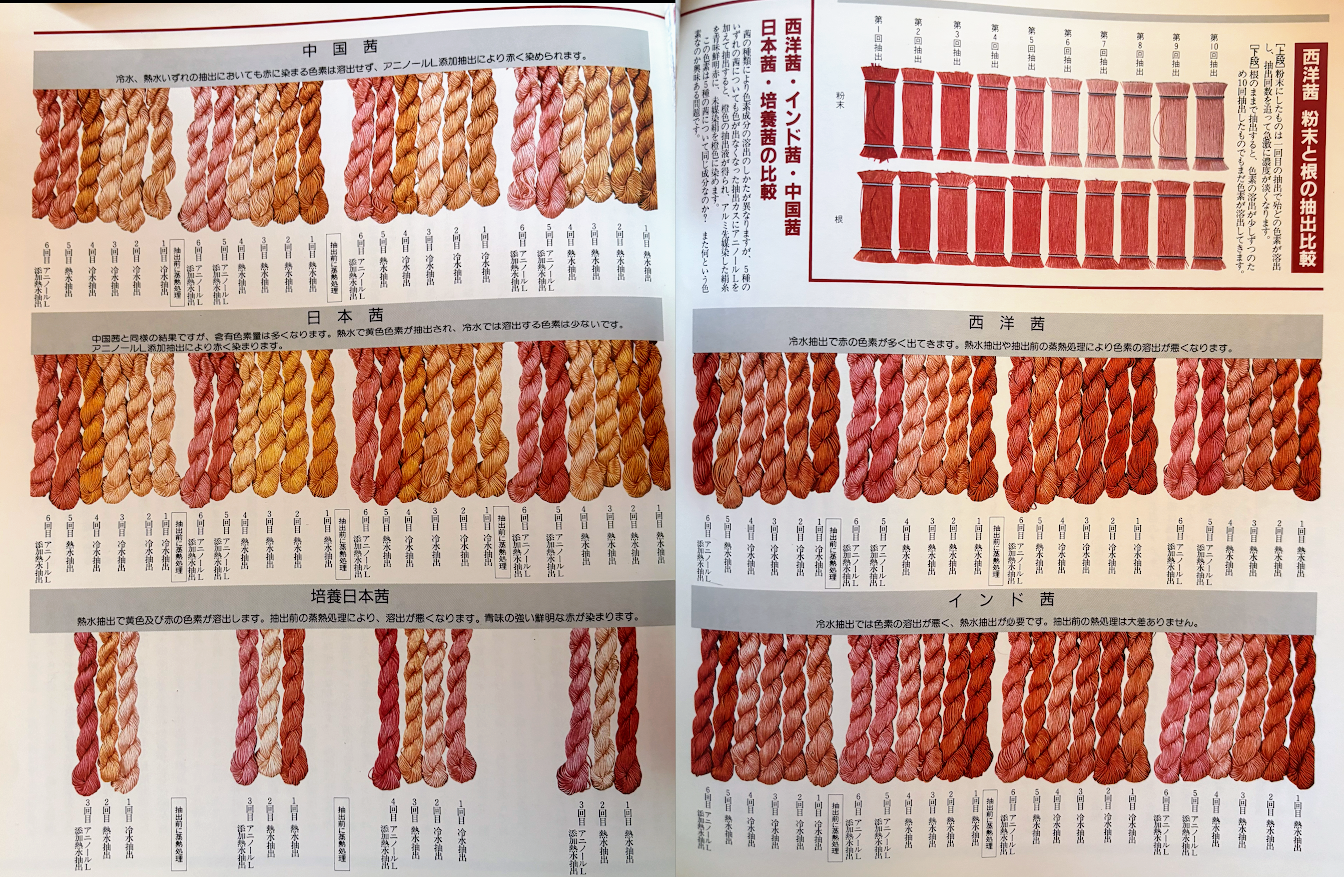
In ancient and medieval China, and Japan, red from madder specifically held an important symbolism as one of the five elements (Earth, Air, Fire, Water, Metal). Red from madder was the fullness of life, fire, also associated with the south, and the season and summer. It was a powerful color, used at burial sites to cover graves to protect the passage of life and death even before the elemental theories emerged.
But not just any red would do! It was specifically the red from madder, not safflower or suoh, that counted as the pure, elemental red. And it was specifically Nihon Akane (Rubia Akane), that would make that color in Heian Japan. Rubia Cordifolia would be imported much later, in the Muromachi period, and Rubia Tinctoria didn’t arrive until the Momoyama period.
So, therefore, if you want the original Japanese red, for the element of fire, then you have to dye with Rubia Akane to see it. This is a very different red than the primary red we are accustomed to seeing in I Ching and Taoism illustrations -more close to cinnabar, which was the accepted mineral pigment for fire. I hope, in a few years, I can share my own photos of this red with you.
To start, I put the seedlings in a bowl of water (I made this one myself!) and let them soak for a day or two.
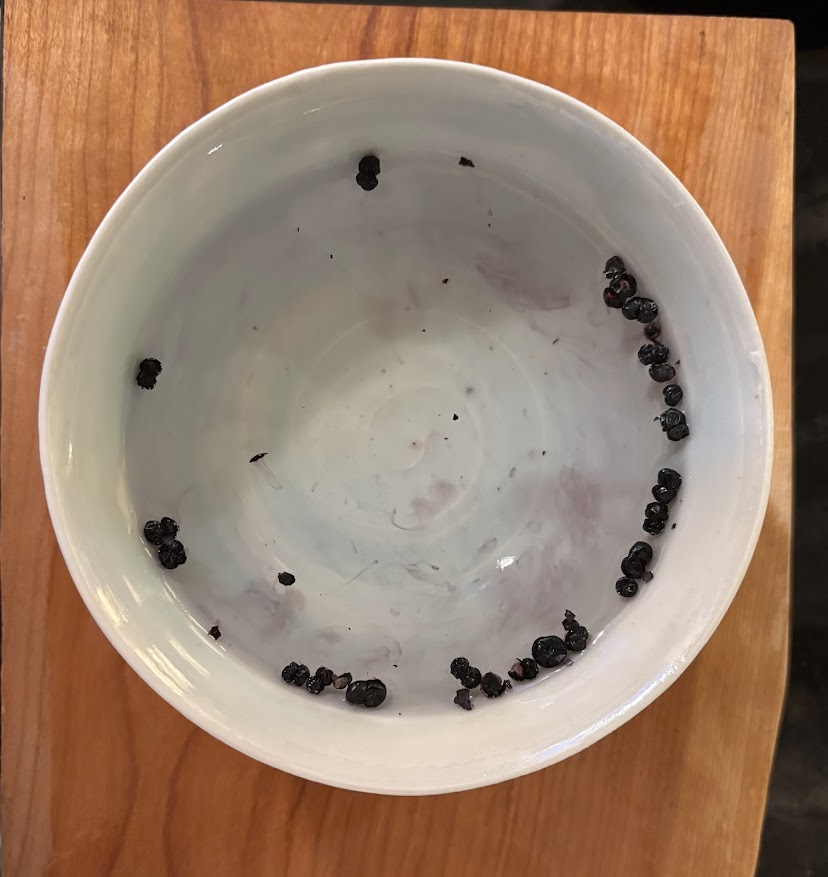

I then put them in my fridge, which actually accidentally froze them for a little bit as they fell to the back, so I started a new batch and put everything in the vegetable drawer
After a long while, two weeks, I planted some of them and then left the rest in the fridge for another two weeks, at which point some of them begin to sprout, so I took them out.
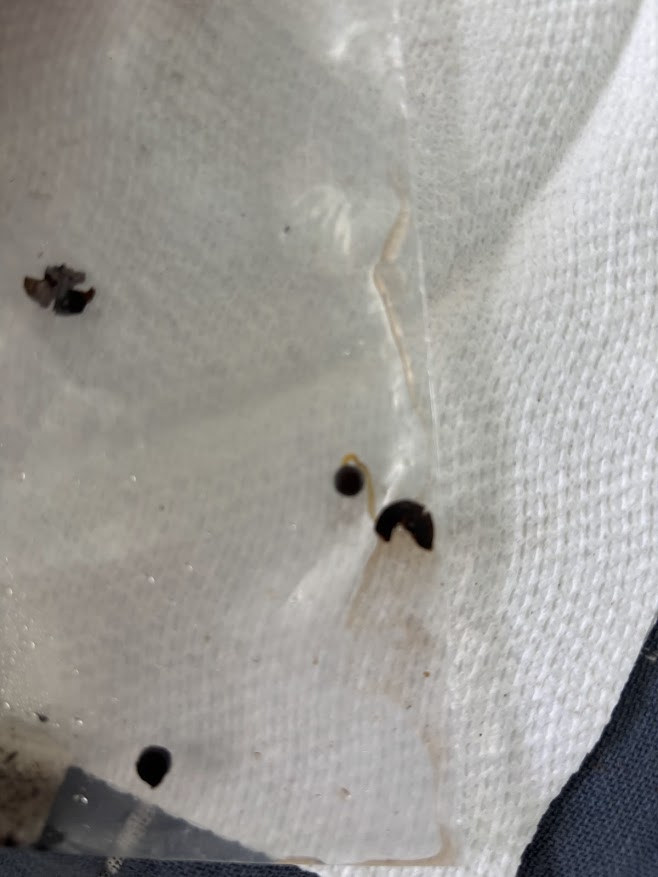

I planted them in Black & Gold Organic Seedling Mix, and put them under my Root Farm lights. I don’t think you need to use these specific brands, I’m just giving them informationally. They hung out in my pottery studio, which is usually around 60-65 degrees and a bit dry in the winter, so they needed frequent watering. I tried to water the bottom of the tray.
In the end it didn’t seem to make a big difference how long the seedlings were in the fridge, just that I was patient with keeping them wet. After about two to three weeks of minimal progress I begin to despair of the whole process, and then they sprouted.

I kept them warm and well watered, and then they started to sprout more and more. I think my germination rate was well above 60%, certainly not the 20% I see frequently quoted online. I had many many more than I thought I would.

When they started crowding and getting a little big for their pots, I moved them into some aluminum cups. I had drilled holes in the bottom of the cups for drainage. I put them back under the light and raised its height so they could get nice and big for spring.

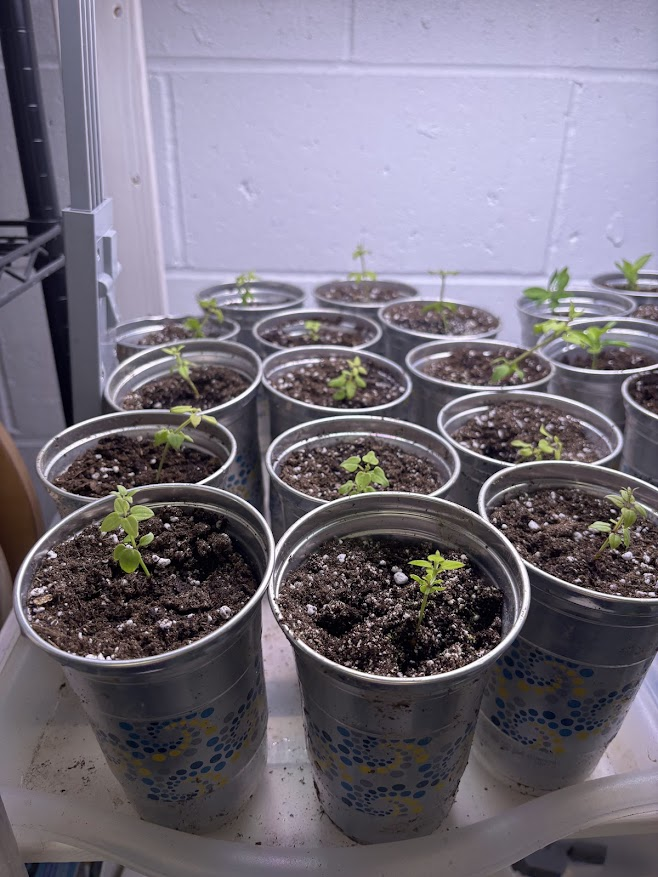
So they’re currently this size, and I’m wondering where in the garden I’m going to have room for them. I need to head out with a pickaxe and some compost and till some soil, so that by planting season in May I have a good spot for every one of them.

It will take 2-5 years for these plants to produce quality dye, so it’s definitely a long term project. I would like to find a way to give and sell these seeds to others. More updates on that later, when I have enough to share.